Our AI-powered PDO thread training teaches you non-surgical face lifting techniques. Learn thread types, insertion vectors, and lifting mechanics through 3D visualization before practicing on real patients.

Dr. MTAI
Your AI Instructor for PDO Thread
Welcome to PDO Thread training! This is one of my favorite topics — the ability to lift and rejuvenate without surgery is remarkable. I'll teach you thread mechanics, vector planning, and safe insertion techniques. Let's master the art of non-surgical lifting!
Learn about PDO, PLLA, and PCL threads — their properties, longevity, and ideal applications.
Explore SMAS layers, fat pads, and safe insertion planes in interactive 3D models.
Practice lift vector calculations in AI simulations. See results before inserting threads.
When confident, practice on real patients with iLead Threads under expert supervision.
I'm Dr. MTAI, and I've designed these interactive learning tools to help you master the art of thread lifting. PDO threads offer non-surgical facial rejuvenation through mechanical lifting and collagen stimulation. Understanding thread types, vectors, and anatomy is essential for achieving natural, lasting results. Let's explore this together.
Explore our educational resources to deepen your understanding of PDO thread therapy
Understanding thread materials and designs is fundamental to selecting the right thread for each indication. I'll teach you the differences between PDO, PLLA, and PCL threads, as well as the various thread configurations available.
| Material | Full Name | Duration | Collagen Stimulation | Best For |
|---|---|---|---|---|
| PDO | Polydioxanone | 6-9 months (thread dissolves); effects last 12-18 months | Moderate — Type I & III collagen | Most common, versatile, proven safety |
| PLLA | Poly-L-Lactic Acid | 12-18 months; effects last 2+ years | Strong — prolonged neocollagenesis | Maximum collagen stimulation, longer results |
| PCL | Polycaprolactone | 24-36 months; effects last 2-3 years | Strong — sustained Type I collagen | Longest duration, significant lifting |
Design: Single smooth strand
Purpose: Collagen stimulation, skin tightening
Areas: Fine lines, neck, décolletage
Design: One or two threads intertwined around cannula
Purpose: Volume restoration, collagen stimulation
Areas: Nasolabial folds, marionette lines, cheeks
Design: Woven pattern creating mesh network
Purpose: Skin tightening, texture improvement
Areas: Large areas, body treatments
Design: Bi-directional or uni-directional barbs
Purpose: Tissue repositioning, mechanical lift
Areas: Midface, jowls, brow, neck
Design: Barbs cut into thread (stronger)
Purpose: Maximum lifting power
Areas: Heavy tissue, significant ptosis
Design: Short, rigid cog threads
Purpose: Nasal bridge height, tip support
Areas: Non-surgical rhinoplasty
Dr. MTAI's Tip
For beginners, I recommend starting with PDO mono threads for skin rejuvenation before advancing to barbed lifting threads. Master the anatomy and insertion technique with simpler threads first.
Thread placement requires deep understanding of facial layers, including the SMAS, fat compartments, and danger zones. The goal is to place threads in the correct plane to achieve lift while avoiding nerves and vessels.
Location: Just below dermis, above SMAS
Use: Mono threads, skin tightening
Safety: Lowest risk, no major structures
Location: Below SMAS, above deep fat
Use: Lifting threads for midface
Safety: Facial nerve branches are deep to this
Location: On periosteum
Use: Anchor points for lifting threads
Safety: Requires advanced training
Safety Alert
The facial nerve and parotid duct are at greatest risk during thread procedures. Always stay superficial in the lateral face.
Frontal branch of facial nerve (superficial)
Zygomatic branches, temporal vessels
Parotid duct, buccal branches of facial nerve
Marginal mandibular nerve (2 cm below jaw)
Dr. MTAI's Tip
I use the 'safe temple entry point' — 2 cm above the lateral brow, within the hairline. This avoids the frontal branch of the facial nerve while providing excellent access to the midface.
Successful thread lifting depends on understanding facial vectors — the direction and angle at which tissue should be repositioned. I'll teach you how to analyze each face and plan optimal lifting vectors.
Lifting vectors should point toward the temples (superolateral direction) — mimicking how a facelift repositions tissue. This creates a natural, youthful appearance.
Entry: Temple or preauricular. Threads angle toward nasolabial fold, creating upward and outward vector.
Entry: Preauricular. Threads cross mandible, lifting jowl tissue superiorly and posteriorly.
Entry: Hairline (3 cm above brow). Threads angle downward to engage brow tissue, then anchor in scalp.
Entry: Behind ear. Threads cross neck at angle to address platysmal bands and loose skin.
Dr. MTAI
AI Medical Instructor
Proper technique ensures thread effectiveness and minimizes complications. I'll walk you through the step-by-step process for both smooth and barbed thread insertion.
Dr. MTAI's Tip
For mono threads, I typically use 10-20 threads per treatment area. Space them 1 cm apart in a crosshatch pattern for optimal collagen stimulation.
Safety Alert
Never force a thread if you feel resistance. This indicates you may be in the wrong plane or encountering a structure. Withdraw and redirect.
While thread lifting is generally safe, complications can occur. Understanding prevention and management is essential for patient safety and practice success.
Dr. MTAI's Tip
I always tell patients: threads provide about 30-40% of a surgical facelift result. If they need more, they may need surgery.
| Complication | Incidence | Prevention | Management |
|---|---|---|---|
| Bruising/Swelling | 30-50% | Avoid blood thinners, use epinephrine | Ice, arnica; resolves 1-2 weeks |
| Asymmetry | 5-10% | Careful marking, equal tension | Wait 2 weeks for swelling to resolve; add threads if needed |
| Thread Palpability | 5-15% | Proper depth, avoid thin skin areas | Usually resolves as threads dissolve; massage gently |
| Thread Extrusion | 1-3% | Proper depth, cut thread below skin | Remove extruded portion, antibiotics if infected |
| Infection | 0.5-1% | Sterile technique, antiseptic prep | Antibiotics; may need thread removal if severe |
| Dimpling/Puckering | 2-5% | Even thread placement, appropriate tension | Massage; usually resolves in days to weeks |
| Nerve Injury | Rare (<0.1%) | Know anatomy, stay in safe planes | Usually temporary (neuropraxia); monitor and reassure |
Dr. MTAI
AI Medical Instructor
I always explain that initial results include swelling, which creates an exaggerated lift. The final result settles over 2-4 weeks. Threads provide improvement, not perfection. Results typically last 12-18 months, and maintenance treatments help sustain results.
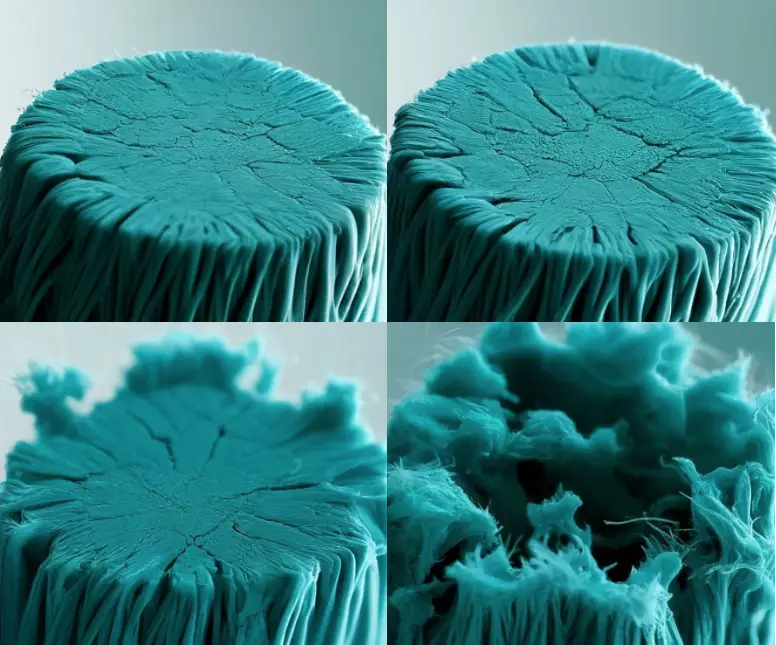
Our AI breaks down the science of absorbable threads. Learn the differences between smooth, twisted, barbed, and cog threads — and when to use each type for optimal lifting and collagen stimulation.
Understand how threads integrate with tissue over time and the biological processes that create long-lasting lifting effects.

Practice thread insertion virtually before hands-on training:



Thread lifts require precise vector planning for natural-looking results. Our AI simulation lets you practice calculating insertion points and lift angles before working on real patients.
See how different thread configurations achieve various lifting effects. Understand the relationship between entry points, exit points, and final lift vectors.
When you've mastered thread theory and vector planning through AI training, schedule your live session to practice with real threads on patients.
Ready to take the next step? Fill out the form below and we'll contact you within 2 hours to discuss your hands-on training options.
Master non-surgical face lifting the smarter way. Learn at your pace, practice vector planning until perfect, and go hands-on when you're truly ready.
Get Started View All CoursesBotox Training and Dermal Fillers for Argentina, Bolivia, Brasil, Chile, Colombia, Costa Rica, Cuba, Dominica, Republica Dominicana, Ecuador, El Salvador, Guatemala, Haiti, Honduras, Mexico, Nicaragua, Panama, Paraguay, Peru, Puerto Rico, Uruguay, Venezuela

Medical Training AI provides courses for Physicians, Nurses, Dentists and other certified healthcare professionals. Our AI-powered training is a powerful resource to improve your practice and generate revenue.
 North America
 South America
 Caribbean
Copyright 2026 Medical Training AI - All rights reserved. - Botox is a registered trademark of Allergan, inc.
Join our newsletter and receive exclusive discounts, training tips from Dr. MTAI, and early access to new courses.