 Medical Training AI
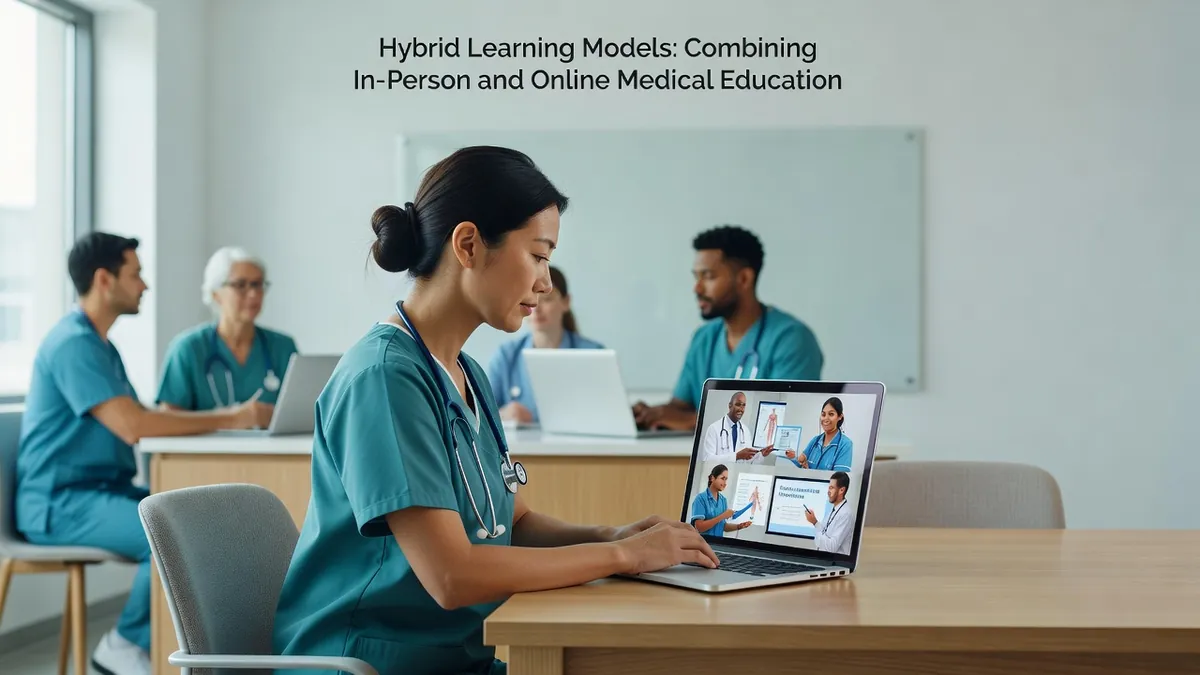
Integrating Virtual and In-Person Education
The debate between online and in-person medical education presents a false dichotomy. Hybrid models that strategically combine both modalities leverage the strengths of each while minimizing their respective limitations.
Medical education has unique requirements that neither purely online nor exclusively in-person approaches can fully address. Procedural skills demand hands-on practice. Clinical reasoning benefits from interactive case discussion. Foundational knowledge can be efficiently transmitted through well-designed digital content. Hybrid models optimize each element for its most effective delivery format.
The Flipped Classroom in Medical Education
The flipped classroom represents one of the most validated hybrid approaches. Learners engage with content asynchronously before sessions through videos, readings, and self-assessments. Face-to-face time then focuses on application, discussion, and problem-solving rather than information transmission.
This model respects both the efficiency of asynchronous content delivery and the value of interactive in-person time. Foundational material can be learned at individual pace, pausing and reviewing as needed. Precious contact time addresses what cannot be achieved alone: collaborative learning, expert feedback, and hands-on practice.
Hybrid Model Benefits
From Online Components:
- Self-paced foundational learning
- Flexibility for busy schedules
- Standardized content quality
- Unlimited review opportunities
From In-Person Components:
- Hands-on procedural training
- Real-time feedback and correction
- Collaborative learning dynamics
- Professional relationship building
Designing Effective Hybrid Programs
Successful hybrid design begins with learning objectives. For each objective, determine whether it requires physical presence, benefits from it but could be achieved virtually, or is equally well-served online. This analysis guides the distribution of content between modalities.
Integration between components is essential. Online preparation must clearly connect to in-person activities. In-person sessions should build upon rather than repeat online content. Assessment should span both modalities, evaluating knowledge gained online and skills developed in person.
Sequencing matters. Typically, foundational knowledge comes first online, followed by application and practice in person, then continued development and reinforcement through ongoing online engagement. However, some programs successfully begin with hands-on exposure to motivate subsequent online study.
Concentrated In-Person Intensives
Many hybrid programs concentrate in-person components into intensive sessions. Learners complete substantial online preparation over weeks or months, then gather for weekend or week-long practical intensives. This model minimizes time away from practice while ensuring adequate hands-on training.
These intensives must be meticulously planned to maximize limited contact time. Every minute should be spent on activities that genuinely require physical presence. Administrative matters, content review, and activities achievable virtually belong in the online components.
Technology Supporting Hybrid Learning
Effective hybrid programs require robust technological infrastructure. Learning management systems track progress across both modalities. Video conferencing enables live virtual sessions that complement in-person gatherings. Assessment platforms evaluate competency regardless of where learning occurred.
Mobile access is increasingly important. Learners expect to engage with online content from any device, in any location. Programs that require desktop access or specific software lose the flexibility advantages that justify hybrid approaches.
Maintaining Cohort Connection
Hybrid programs must intentionally build community across distributed learning. Cohort models help learners feel connected to peers even when studying independently online. Virtual study groups, discussion forums, and synchronous online sessions maintain relationships between in-person gatherings.
The risk of isolation in online components must be actively countered. Regular touchpoints, whether synchronous sessions or required peer interactions, keep learners engaged with their cohort. Faculty presence in online spaces signals that these components matter as much as in-person time.
Assessment in Hybrid Models
Hybrid programs can assess comprehensively across learning modalities. Online assessments efficiently evaluate knowledge and reasoning. In-person assessments verify procedural skills and observed clinical behaviors. Portfolio approaches document learning across the entire program.
Integration of assessment data provides rich pictures of learner development. Correlating online quiz performance with in-person skill demonstration reveals whether knowledge translates to practice. Identifying gaps guides both individual feedback and program improvement.
"The hybrid format gave me flexibility I desperately needed while ensuring I got adequate hands-on training. I completed online modules between patients and during evenings, then immersed myself fully during the practical intensives."
The Future of Medical Education
Hybrid models represent the likely future of most medical education. The pandemic accelerated adoption, but the educational advantages will sustain these approaches. Programs that thoughtfully combine online efficiency with in-person depth will deliver superior outcomes compared to either modality alone.
Experience Our Hybrid Training Programs
Our courses combine flexible online learning with intensive hands-on sessions for optimal skill development.
Explore Programs