 Medical Training AI
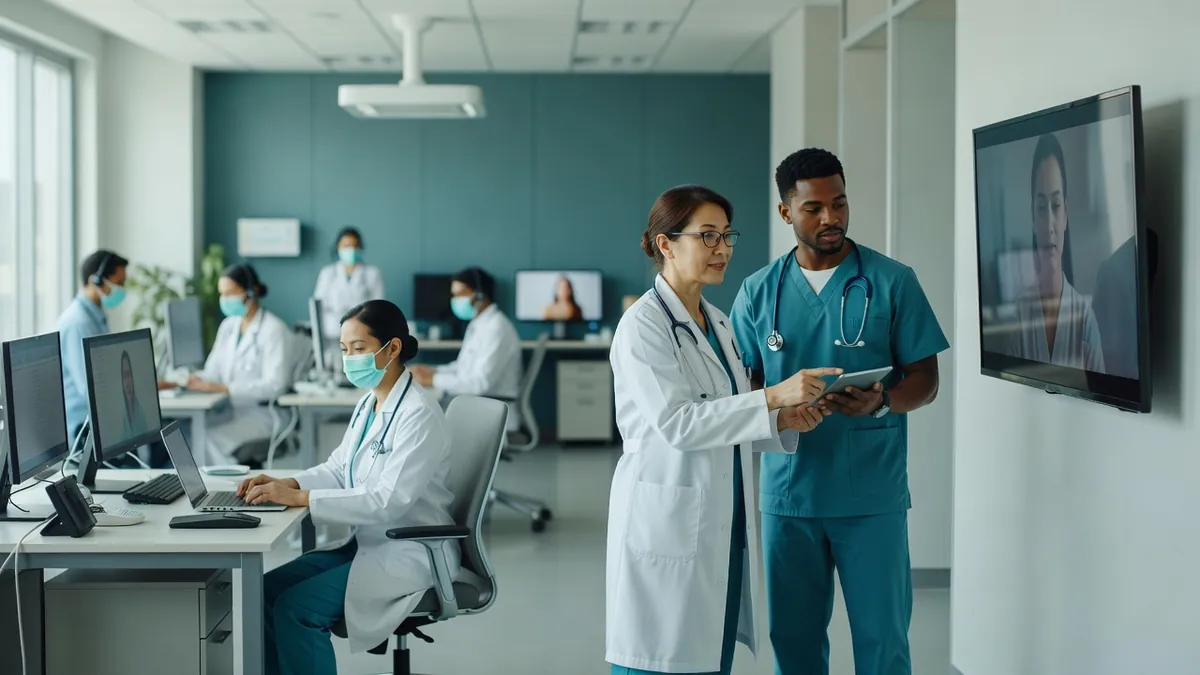
Delivering High-Quality Care Through Telemedicine
Telemedicine has become an integral component of healthcare delivery. Mastering virtual care techniques enables physicians to provide convenient, accessible, and high-quality care to patients regardless of geographic barriers.
While telemedicine offers many advantages, it also presents unique challenges that require adaptation of traditional clinical skills. Understanding best practices for virtual consultations helps ensure that telemedicine visits are as effective as in-person encounters.
Setting Up for Success
The physical environment for telemedicine consultations matters. A professional, uncluttered background, appropriate lighting that illuminates your face, and a camera positioned at eye level all contribute to a more engaging and professional interaction. Testing equipment before sessions prevents technical difficulties that can disrupt care.
Ensure your internet connection is reliable and that you have backup options if primary systems fail. Familiarity with your telemedicine platform's features, including screen sharing and virtual waiting room functions, enables smooth consultations.
Technical Setup Checklist
- Professional, neutral background
- Good lighting on your face
- Camera at eye level
- Reliable internet connection
- Quality audio with minimal background noise
- Familiarity with platform features
- Backup communication method available
Building Rapport Virtually
Establishing therapeutic rapport is possible through video but requires intentional effort. Making eye contact by looking at the camera rather than the screen, using verbal acknowledgments more frequently, and allowing for brief pauses to ensure patients have finished speaking all help build connection.
Starting with a warm greeting and brief social exchange before diving into medical content helps patients feel comfortable. Acknowledging the virtual format and asking about the patient's telemedicine experience demonstrates attentiveness to their needs.
Conducting the Virtual Examination
Physical examination in telemedicine requires creativity and patient involvement. Many examination findings can be assessed through observation and guided self-examination. Teaching patients to position their camera, palpate areas of concern, or perform specific maneuvers expands what can be accomplished remotely.
Visual inspection can assess skin lesions, wounds, swelling, gait, and respiratory effort. Having patients obtain and report vital signs, including blood pressure, heart rate, temperature, and oxygen saturation if available, provides valuable objective data.
Communication Strategies
Clear communication becomes even more important in virtual settings where non-verbal cues may be harder to detect. Summarizing key points, asking patients to repeat back important instructions, and providing written visit summaries help ensure understanding.
Be explicit about next steps, including when follow-up is needed, what symptoms should prompt earlier contact, and how to reach you or your practice if concerns arise. The lack of a physical checkout process makes clear verbal closure of the visit particularly important.
Appropriate Telemedicine Presentations
- Follow-up visits for stable conditions
- Medication management
- Mental health visits
- Results review
- New concerning symptoms
- Need for detailed examination
- Procedures required
- Diagnostic uncertainty
Documentation and Legal Considerations
Telemedicine documentation should include verification of patient identity and location, confirmation of informed consent for virtual care, documentation of participants present during the visit, and any technical limitations that affected the encounter.
Understanding your state's telemedicine regulations, including requirements for prescribing and licensure for out-of-state patients, is essential for compliant practice. Maintaining awareness of evolving telemedicine policies helps ensure legal practice.
Knowing When In-Person Care Is Needed
Recognizing the limitations of telemedicine is crucial for patient safety. Some presentations require in-person evaluation due to the need for detailed physical examination, diagnostic testing, or procedural intervention. Establishing clear criteria for escalation to in-person care protects patients.
When uncertainty exists about whether a condition can be adequately assessed virtually, erring on the side of in-person evaluation is prudent. Communicating the reasoning for this recommendation helps patients understand the decision.
Optimizing Workflow
Efficient telemedicine workflows benefit both clinicians and patients. Pre-visit questionnaires can gather relevant information before the encounter. Having patients prepare questions in advance maximizes visit productivity. Integrating telemedicine smoothly into overall practice operations enables sustainable virtual care delivery.
Scheduling adequate time for telemedicine visits, including buffer time for technical issues, prevents rushed encounters and allows for thorough care.
Conclusion
Telemedicine has earned its place as a permanent component of healthcare delivery. By developing skills specific to virtual care and applying best practices consistently, physicians can provide excellent care through telemedicine that complements and extends their in-person practice.
Excel in Digital Health
Our telemedicine and digital health modules provide comprehensive training for delivering outstanding virtual care.
Explore Our Courses