 Medical Training AI
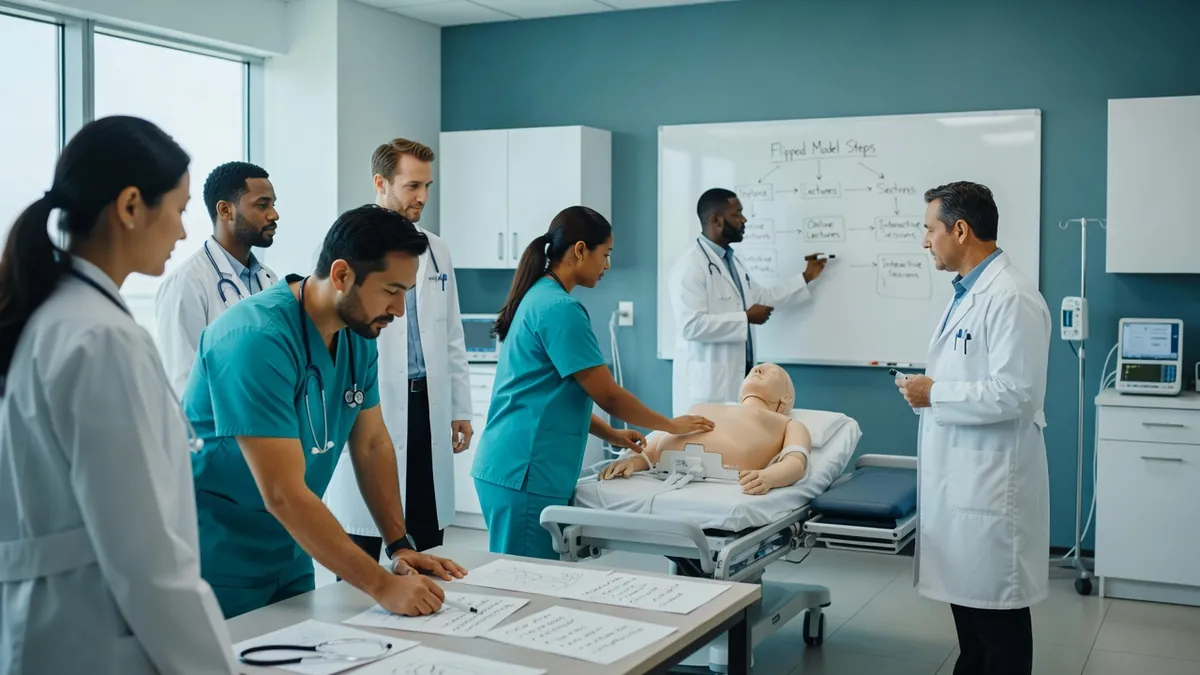
Inverting the Traditional Classroom Model
The flipped classroom reverses traditional educational approaches: students learn foundational content before class through videos and readings, then spend classroom time on active learning activities that deepen understanding. This model is transforming medical education worldwide.
Rather than passively listening to lectures, students in flipped classrooms engage in case discussions, problem-solving, and peer teaching, all facilitated by instructors who can address individual questions and misconceptions.
Why Flip the Classroom?
Traditional lectures are an inefficient use of expert faculty time. An hour spent lecturing to 150 students is the same material repeated identically regardless of student background or comprehension level. Students who already understand the content are bored; those who struggle have no opportunity to ask questions.
The flipped model reserves faculty time for higher-value activities. Content delivery happens asynchronously, allowing students to learn at their own pace, pause to take notes, and review difficult concepts. Classroom time is then devoted to application, analysis, and synthesis activities that benefit from expert guidance.
Traditional vs. Flipped Classroom
- Lecture in class
- Passive listening
- Homework at home alone
- Questions go unanswered
- Content before class
- Active engagement in class
- Expert guidance for difficult work
- Immediate feedback and clarification
Designing Pre-Class Materials
Effective flipped classrooms require thoughtfully designed pre-class materials. Short videos, typically under fifteen minutes, work better than recorded hour-long lectures. Interactive elements, knowledge checks, and study guides help students engage actively with content.
Pre-class materials must align closely with in-class activities. Students should clearly understand what they need to know before class and why that knowledge matters for the active learning that follows.
In-Class Active Learning
The real power of the flipped classroom emerges during class sessions. Freed from content delivery, instructors can facilitate case discussions, guide problem-solving, supervise team-based learning, and provide individualized feedback.
Popular in-class activities include clinical case analysis, team-based learning modules, simulation exercises, and peer teaching. The common thread is student activity rather than passive reception.
Ensuring Student Preparation
The flipped classroom fails if students arrive unprepared. Without foundational knowledge, active learning activities become frustrating rather than enriching. Accountability mechanisms encourage preparation.
Pre-class quizzes assess whether students have engaged with materials. Readiness assurance tests at the start of class verify preparation before team activities. Importantly, these assessments should be low-stakes, encouraging learning rather than generating anxiety.
"The flipped classroom finally uses class time for what it is best suited: the challenging work that benefits from expert guidance and peer collaboration."
Evidence for Effectiveness
Research generally supports flipped classroom effectiveness in medical education. Students often perform as well or better on examinations compared to traditional instruction. More importantly, they frequently report higher satisfaction, better understanding, and greater engagement.
The flipped model may particularly benefit struggling students, who gain the ability to review difficult content repeatedly before class and receive more individualized attention during active learning sessions.
Implementation Challenges
Flipping a classroom requires significant upfront investment. Creating high-quality pre-class materials takes time and expertise. Faculty may need development in facilitation skills quite different from lecturing abilities. Students accustomed to passive learning may initially resist the increased expectations.
Successful implementation typically involves phased rollout, faculty development programs, and clear communication with students about the rationale and expectations of the new approach.
Active Learning at Your Pace
Our online courses combine self-paced content mastery with interactive exercises that deepen your understanding and skills.
Start Learning