 Medical Training AI
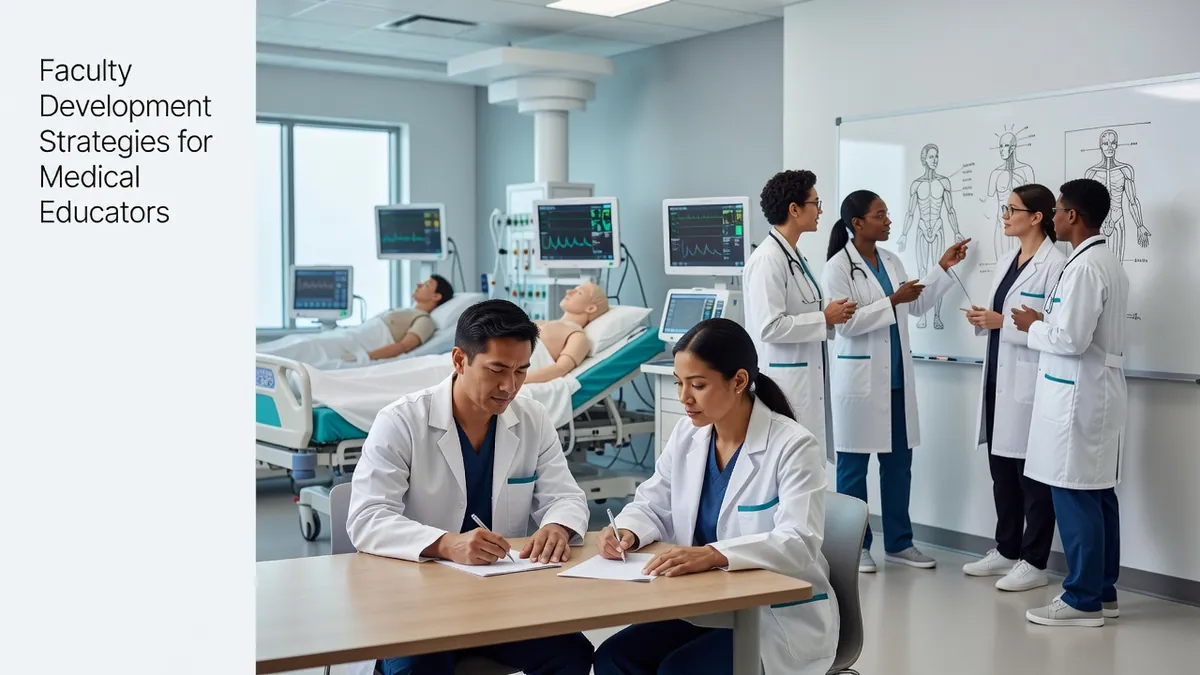
Building Teaching Excellence
Physicians receive extensive training in clinical medicine but little formal preparation for teaching. Faculty development addresses this gap, helping clinicians become effective educators through structured programs that build pedagogical knowledge, teaching skills, and educational scholarship capacity.
Investment in faculty development improves educational quality institution-wide, benefiting learners, faculty, and ultimately patients.
Why Faculty Development Matters
Teaching quality directly affects learning outcomes. Faculty who understand educational principles design better curricula, deliver more effective instruction, and provide more useful feedback. Without faculty development, teaching quality depends on individual talent rather than systematic skill-building.
Faculty development also supports career satisfaction and retention. Educators who feel competent and valued in their teaching roles report higher job satisfaction. Institutions benefit from retaining talented clinician-educators.
Faculty Development Focus Areas
- Teaching skills: Presentation, facilitation, feedback
- Curriculum development: Design, implementation, evaluation
- Assessment: Creating and using assessment tools
- Educational scholarship: Research and publication
- Leadership: Educational leadership skills
- Technology: Educational technology integration
Types of Faculty Development Programs
Faculty development takes many forms. Brief workshops address specific skills like giving feedback or writing assessment questions. Longitudinal programs, such as teaching academies or master teacher fellowships, provide comprehensive development over months or years.
Peer observation programs pair faculty for mutual feedback on teaching. Communities of practice bring together educators with shared interests for ongoing collaboration and support. Online modules enable self-paced learning of foundational concepts.
Teaching Skills Development
Core teaching skills form the foundation of faculty development. Effective presentations, small-group facilitation, bedside teaching, and feedback delivery are learnable skills that improve with instruction and practice.
Beyond techniques, faculty development helps educators understand how learning works. Knowledge of adult learning theory, cognitive psychology, and educational assessment informs more effective teaching practice.
Educational Scholarship
Academic advancement increasingly requires educational scholarship. Faculty development programs help clinicians develop research questions, design educational studies, analyze data, and publish findings. Moving from excellent teacher to educational scholar requires deliberate skill development.
Mentorship is particularly important for educational scholarship. Connecting aspiring educational researchers with experienced mentors accelerates development and improves scholarly productivity.
"Every great clinical teacher was once a novice educator who developed through deliberate effort. Faculty development transforms good clinicians into great teachers."
Leadership Development
Medical educators often assume leadership roles: course directors, clerkship directors, program directors, and deans. Faculty development programs prepare educators for leadership by developing skills in change management, conflict resolution, resource stewardship, and strategic planning.
Leadership development recognizes that educational leaders need different skills than frontline teachers, though they benefit from understanding teaching as well.
Building Faculty Development Programs
Institutions building faculty development programs should assess local needs, secure administrative support, and recruit skilled facilitators. Programs work best when embedded in institutional culture rather than operating as isolated offerings.
Evaluation of faculty development impact justifies continued investment. Evidence that programs improve teaching quality, learner outcomes, and faculty satisfaction demonstrates value to institutional leaders.
Develop Your Teaching
Our professional development resources help medical educators build the skills for teaching excellence and career success.
Explore Faculty Development