 Medical Training AI
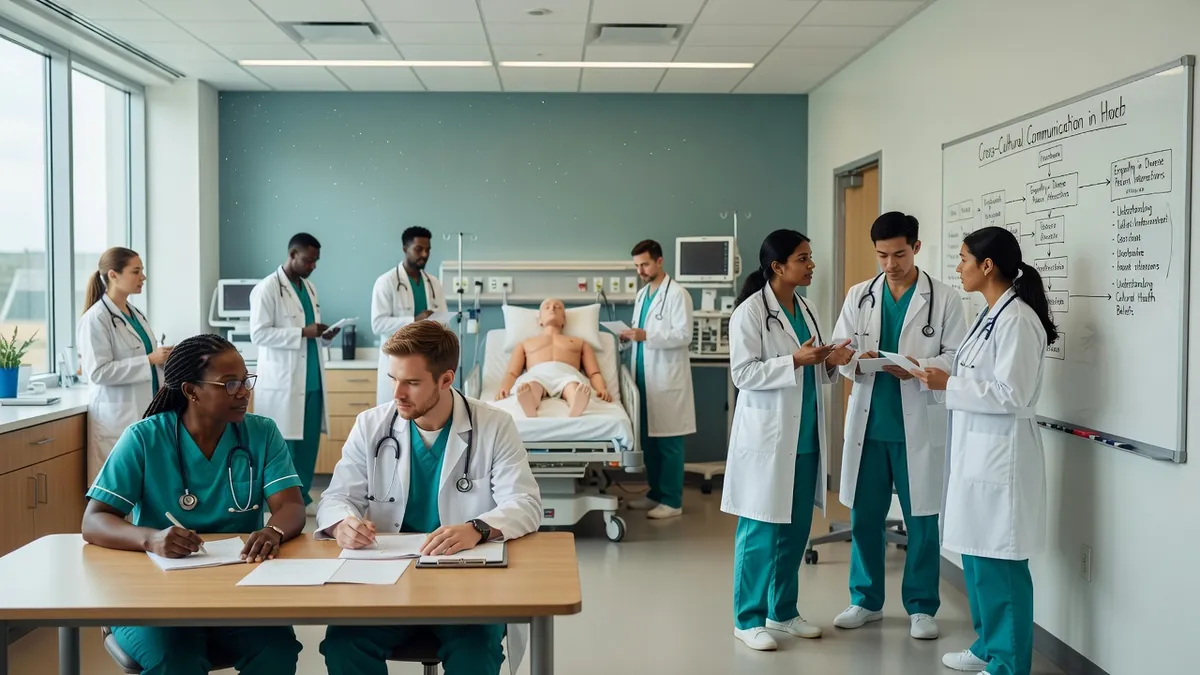
Caring for Diverse Populations
As populations become increasingly diverse, physicians must be prepared to provide effective care across cultural differences. Cultural competency education aims to develop awareness, knowledge, and skills that enable respectful, responsive care for patients of all backgrounds.
From cultural humility to structural competency, medical education is evolving to address the complex relationship between culture, social context, and health.
Understanding Cultural Competency
Cultural competency encompasses the attitudes, knowledge, and skills needed to provide quality care to patients from diverse backgrounds. It includes awareness of one's own cultural assumptions, knowledge of different cultural practices and beliefs, and skills in cross-cultural communication.
Importantly, cultural competency is not about memorizing facts about different groups. It is about approaching each patient as an individual while recognizing how cultural context shapes their experience of health, illness, and healthcare.
Components of Cultural Competency
- Self-awareness: Recognizing own biases and assumptions
- Cultural knowledge: Understanding diverse beliefs and practices
- Cultural skill: Conducting culturally appropriate encounters
- Cultural encounters: Engaging with diverse patients and communities
- Cultural desire: Motivation to become culturally competent
From Competency to Humility
The concept of cultural humility has emerged as an important complement to cultural competency. While competency implies a destination that can be achieved, humility emphasizes ongoing learning and self-reflection. No one can be fully competent in all cultures.
Cultural humility involves recognizing the limits of one's knowledge, being open to learning from patients about their experiences, and examining power dynamics in healthcare relationships. It shifts focus from knowing about cultures to genuinely engaging with individuals.
Structural Competency
Recent frameworks extend beyond individual cultural factors to address structural determinants of health. Structural competency recognizes that health outcomes are shaped by social, economic, and political forces, not just cultural beliefs.
Physicians need to understand how poverty, racism, immigration status, and other structural factors affect their patients' health and healthcare access. This understanding enables advocacy and engagement with systems, not just individual clinical encounters.
Teaching Approaches
Cultural competency education uses varied teaching methods. Didactic instruction provides foundational knowledge about health disparities and cultural factors in health. Experiential learning through community engagement and clinical experiences with diverse populations builds practical skills.
Simulated encounters with standardized patients from different cultural backgrounds allow practice of cross-cultural communication. Reflection exercises help learners examine their own assumptions and biases.
"Cultural competency is not about treating everyone the same; it is about treating everyone with the same respect while recognizing that their experiences, needs, and preferences may differ."
Addressing Implicit Bias
Research demonstrates that healthcare providers, like all people, hold implicit biases that can affect clinical decisions and patient interactions. Medical education increasingly addresses implicit bias through awareness training, perspective-taking exercises, and strategies for bias mitigation.
Simply knowing about bias is insufficient; learners need practical strategies for recognizing when bias may be influencing their thinking and taking steps to counteract it.
Assessment Challenges
Assessing cultural competency is challenging. Knowledge about different cultures can be tested, but attitudes and behaviors are harder to measure. Standardized patient encounters assess communication skills but may not capture ongoing clinical practice.
Multisource feedback, patient satisfaction data disaggregated by patient demographics, and reflective portfolios provide additional perspectives on cultural competency development.
Culturally Responsive Training
Our programs prepare you to provide excellent care to patients from all backgrounds, developing both skills and humility for diverse practice.
Learn About Our Approach