 Medical Training AI
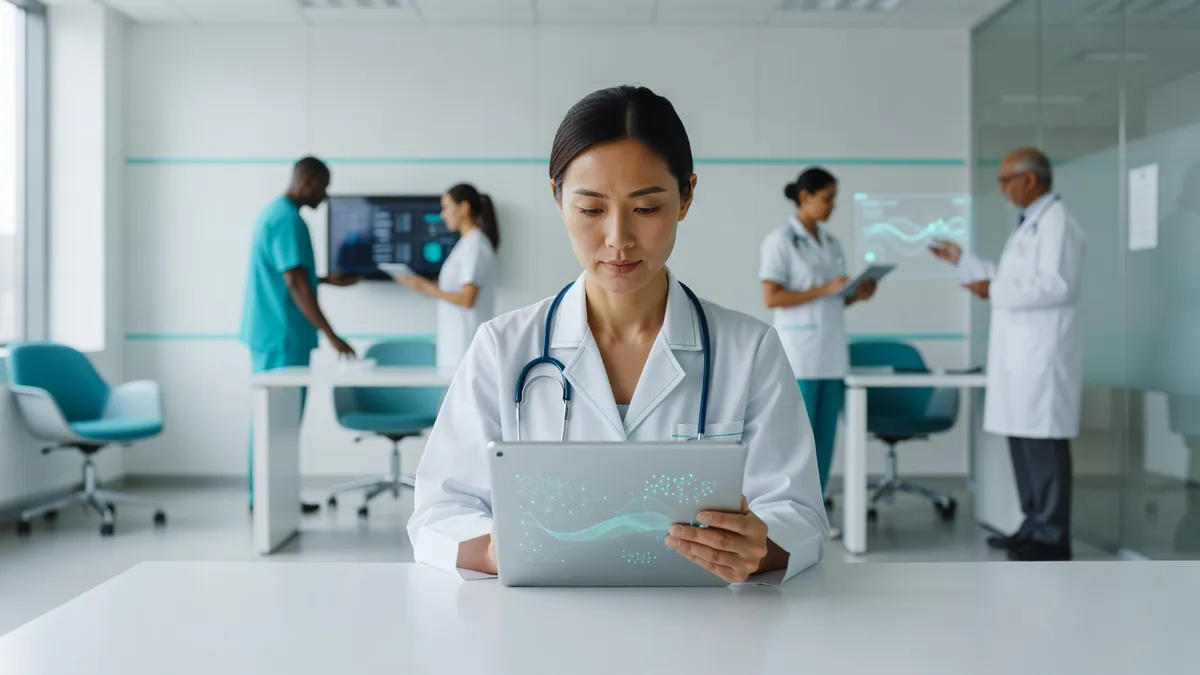
Learning to See What Experts See
Medical image interpretation is a skill developed over years of experience. Deep learning technology is accelerating this learning process, providing intelligent tutoring systems that help practitioners develop expert-level visual pattern recognition more efficiently than traditional training methods allow.
The ability to interpret medical images accurately requires recognizing subtle patterns across thousands of possible presentations. Traditionally, this skill developed slowly through case exposure during training and practice. Deep learning offers new approaches to accelerate this development.
Neural Networks as Teachers
Deep learning systems trained on vast image databases have learned to recognize patterns that distinguish normal from abnormal, benign from malignant, acute from chronic. These systems can serve as teachers, helping human learners develop similar pattern recognition capabilities.
When a learner examines an image, deep learning systems can highlight relevant features, explain what patterns indicate specific diagnoses, and contrast subtle differences between similar presentations. This guided attention training accelerates the development of expert visual search strategies.
Unlimited Case Libraries
One challenge in image interpretation training is exposure to sufficient case variety. Rare conditions may be underrepresented in training sets. Deep learning enables creation of comprehensive case libraries ensuring learners encounter the full spectrum of presentations, including uncommon but important findings.
Generative AI techniques can even create synthetic cases representing rare presentations, augmenting training sets without relying solely on historical data. This ensures practitioners are prepared for conditions they may rarely encounter in routine practice.
Immediate Feedback on Interpretation
Deep learning systems provide instant feedback on image interpretation attempts. When a learner marks findings or proposes diagnoses, the AI immediately evaluates accuracy and provides explanations for correct answers. This immediate feedback loop accelerates learning compared to delayed review.
The systems identify common interpretation errors and provide targeted guidance. If a learner consistently misses a particular type of finding, the system recognizes this pattern and provides focused remediation with additional examples and explanations.
Calibration of Diagnostic Confidence
Expert image interpreters know not just what findings mean but how confident to be in interpretations. Deep learning systems help calibrate learner confidence, showing when findings are definitively diagnostic versus when additional information is needed. This metacognitive skill is crucial for clinical decision-making.
By comparing learner confidence levels with AI certainty scores and actual diagnoses, systems provide feedback on calibration. Overconfident learners learn appropriate caution; underconfident ones gain appropriate assertiveness in their interpretations.
Applications in Aesthetic Medicine
For aesthetic medicine practitioners, deep learning supports education in facial analysis, skin assessment, and treatment planning visualization. Systems can analyze facial proportions, identify asymmetries, and model predicted treatment outcomes, building the visual assessment skills essential for aesthetic practice.
At Medical Training AI, deep learning powers our visual training modules, helping practitioners develop the keen eye needed for excellent aesthetic outcomes.
Develop Expert Visual Skills
Train your eye with AI-powered image interpretation education designed for aesthetic medicine professionals.
Start Training