 Medical Training AI
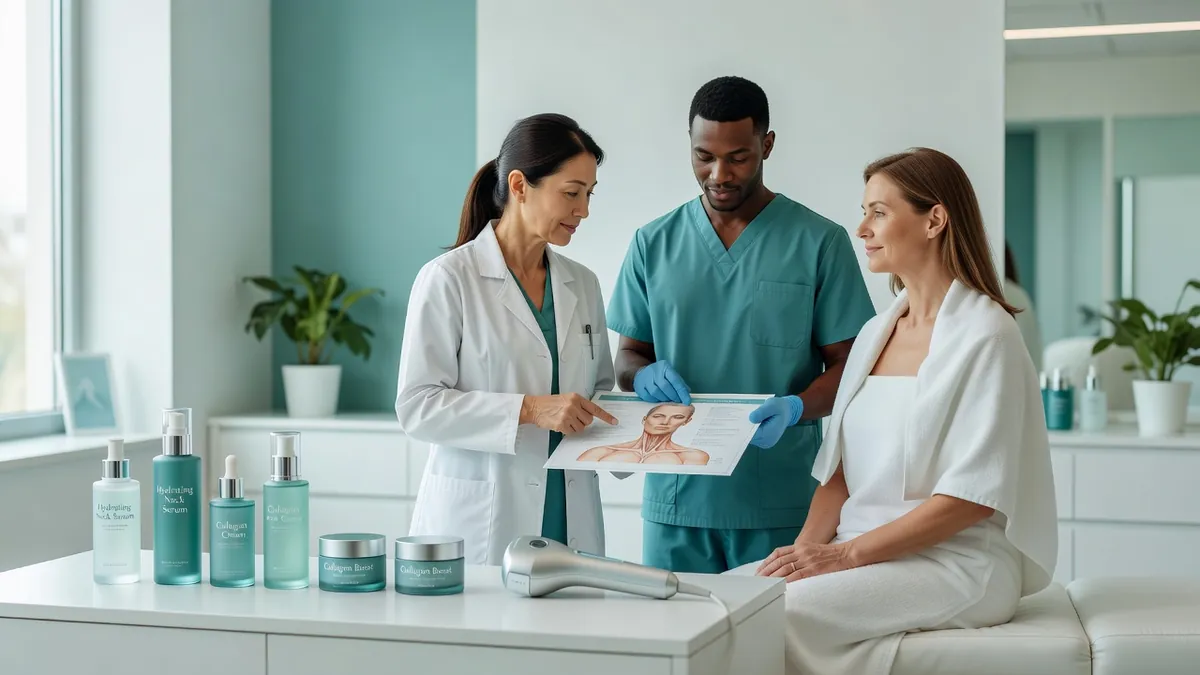
Completing the Rejuvenation Story
A youthful face above an aging neck and chest creates a jarring disconnect that undermines facial rejuvenation efforts. Addressing the neck and decolletage requires understanding the unique challenges these areas present and selecting appropriate treatment modalities.
The neck and chest receive significant sun exposure throughout life, yet these areas are often neglected in skincare routines. Thin skin with fewer sebaceous glands makes these regions particularly vulnerable to photoaging. Multiple treatment modalities are typically required for meaningful improvement.
Aging Changes in the Neck
Platysmal banding creates vertical cords that are visible at rest or with neck tension. These bands represent the medial borders of the platysma muscle that have separated with age. Neuromodulator treatment can soften their appearance significantly.
Horizontal neck lines develop from repeated flexion and become etched into thin neck skin. These dynamic and static lines present treatment challenges as the neck skin responds differently than facial skin to intervention.
Skin laxity and textural changes contribute to the aged neck appearance. Loss of elasticity creates sagging that may progress to the "turkey neck" appearance. Skin tightening technologies address this component with varying degrees of success.
Decolletage Concerns
Solar lentigines and textural damage from chronic sun exposure create mottled, aged chest appearance. The thin skin of the decolletage shows sun damage prominently, often appearing more aged than the protected face.
Crepey skin texture results from collagen loss and elastic fiber damage. This tissue paper appearance responds to collagen-stimulating treatments though improvement requires patience and realistic expectations.
Sleep wrinkles create vertical lines on the chest from side sleeping positions. These creases, while not directly sun-related, contribute to aged appearance and can be addressed with volumizing treatments.
Neuromodulator Treatment for Neck Bands
Platysmal band treatment involves injection directly into the visible cords. Having patients tense their neck muscles makes the bands more visible and palpable for accurate targeting. Small aliquots of 2-3 units per injection point, spaced approximately 1.5 cm apart along the band length, typically produce good results.
The Nefertiti lift extends treatment along the mandibular border and upper neck to address early jowling and improve jawline definition. This technique requires understanding the balance between platysma and the muscles it opposes.
Microdroplet technique uses very dilute botulinum toxin distributed superficially across the neck to improve skin texture and reduce fine wrinkling. This off-label application shows promise but requires experience to execute appropriately.
Energy-Based Treatments
Radiofrequency devices provide non-invasive skin tightening through collagen remodeling. Both monopolar and bipolar devices have applications in neck and chest treatment. Results develop over months as collagen remodeling occurs.
Microneedling with radiofrequency combines controlled injury with thermal energy for collagen stimulation. This modality can improve skin texture and modest laxity in the neck and chest. Multiple treatments are typically required.
Intense pulsed light addresses pigmentation on the chest effectively. Treatment of lentigines improves overall chest appearance significantly. Proper settings for the thinner chest skin differ from facial parameters.
Fractional laser resurfacing improves texture and pigmentation through controlled thermal injury. The chest and neck require more conservative settings than the face due to different healing characteristics. Risk of scarring mandates experienced application.
Injectable Treatments
Biostimulatory agents like poly-L-lactic acid and calcium hydroxylapatite can improve neck and chest skin quality through collagen stimulation. Diluted preparations distributed superficially produce gradual improvement over multiple treatments.
Polynucleotides represent an emerging option for neck and decolletage rejuvenation. These products improve skin quality through biostimulatory mechanisms distinct from traditional fillers.
Hyaluronic acid skin boosters hydrate and improve skin quality when distributed superficially. Multiple treatments create cumulative improvement in skin texture and elasticity.
Combination Protocols
No single treatment addresses all aspects of neck and decolletage aging. Combination protocols that address pigmentation, texture, laxity, and volume produce superior outcomes compared to single-modality treatment.
Sequencing treatments appropriately optimizes results and safety. Energy-based treatments typically precede injectables. Pigmentation treatment often comes before resurfacing procedures.
Neck and Decolletage Treatment Options
- Platysmal bands: Botulinum toxin
- Horizontal lines: Biostimulators, skin boosters
- Skin laxity: RF devices, ultrasound
- Pigmentation: IPL, laser
- Texture: Fractional treatments, microneedling
- Sleep wrinkles: Filler (careful selection)
Setting Expectations
Neck and decolletage rejuvenation produces more modest results than facial treatment. The thin skin, chronic sun damage, and ongoing exposure limit achievable improvement. Patients should understand that maintenance is required.
Significant neck laxity may require surgical intervention. Non-surgical treatments cannot replicate the results of platysmaplasty or neck lift. Appropriate patient selection prevents disappointment.
Comprehensive Rejuvenation Training
Our courses cover neck and decolletage treatment as part of complete non-surgical rejuvenation protocols.
View Course Options